

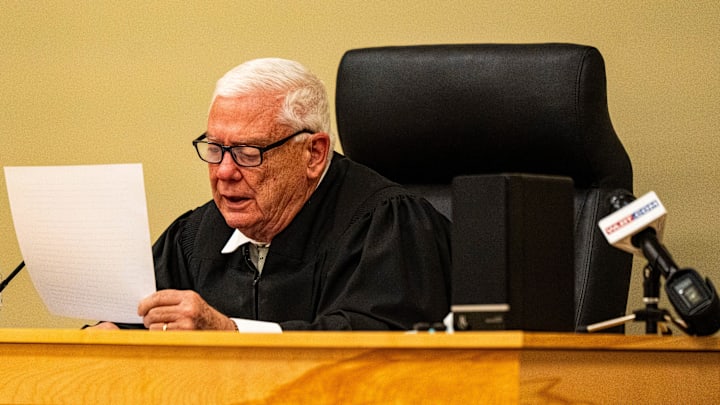
The NCAA's first time in Pittsboro, Mississippi court was a disaster. They can only hope their second time isn't.
When Judge Robert Whitwell took a break to prepare his 92-minute-long ruling in the Trinidad Chambliss case, the NCAA lawyers J. Douglas Minor, Taylor Askew, and Daniel Zeitlin bailed on the hearing altogether, saying they had "other hearings to attend".
When he got to know about it, Judge Whitwell said, "That's not how we do things here," along with a clear warning of a show-cause penalty.
NCAA dealing with inevitable repercussions
And exactly after a week of granting Chambliss his injunction, the NCAA finally got served with the impending show-cause penalty on Feb. 19.
"The attorneys' departure was made without obtaining this court's prior permission and approval," Whitwell said in the order.
"This cause is before the Court on its own ore tenus motion to require the attorneys…to personally appear before this Court and show case and explain why all of them left the courtroom…before the conclusion of the hearing…The attorney’ departure was made without obtaining this Court’s prior permission an approval," the order read.
Here is the Order to Show Cause requiring the NCAA's attorneys to appear and explain their early departure from the February 12 hearing in the Trinidad Chambliss case. pic.twitter.com/6nh1Oq0qCu
— Mississippi Appeals (@MS_Appeals) February 19, 2026
"This matter will be addressed at a later proceeding at which time the Court will decide whether some form of sanctions against the aforementioned attorneys, if any, are appropriate under the circumstances.”
Judge Whitwell had been pretty blunt about the astounding act and made sure the whole nation knew about the grave misconduct.
“I made an announcement to the crowd that anyone could stay if they wanted to or leave. I didn’t instruct the lawyers to go anywhere,”Whitwell said before reading his ruling.
"That’s not the way it works. They know better than to leave before the court reaches a final decision.”
First the individual eligibility cases, and now more perfectly avoidable legal battles out of them are problems the NCAA created on its own.
Now they are left with no option but to fight it through.
 Add us as a preferred source on Google