

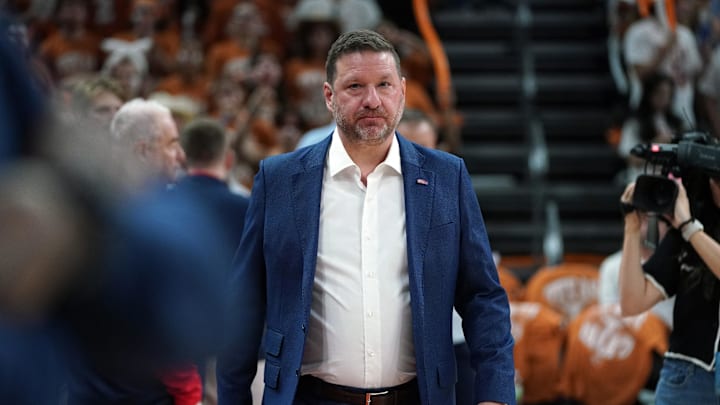
Coming off the best season in decades, a 24–12 record and a Sweet 16 run that energized Oxford, expectations for the 2025–26 Ole Miss men’s basketball team were sky-high.
Coach Chris Beard had restored the program with postseason success, and fans and pundits alike envisioned a continuation of that upward trajectory. Instead, what unfolded has been, for many Rebel supporters, a season of frustration, unmet promise, and organizational reckoning.
High Hopes After a Historic Campaign
After the 2024–25 season, where Ole Miss captured national attention by reaching the Sweet Sixteen for only the second time in program history, the sky seemed to be the limit. Program momentum was real, attendance was soaring, and the Rebels were widely seen as a rising power in the SEC.
But college basketball’s new financial landscape, fueled by the NCAA’s revenue-sharing model and expanded NIL opportunities, has created a hyper-competitive environment where spending on roster talent isn’t just helpful, it’s mandatory.
Schools in the SEC and other Power 4 leagues are leveraging millions in player compensation to attract and retain elite talent, raising the bar for programs like Ole Miss that are still building their revenue base.
Roster Turnover and a Rebuild That Didn’t Click
The biggest challenge for the 2025–26 Rebels was roster continuity. Ole Miss lost a huge portion of its production from the Sweet 16 squad, with key starters and leaders graduating or moving on.
The rebuild that followed included bringing in a blend of transfers (like A.J. Storr, Kezza Giffa, James Scott, and others) and younger talent to offset the losses, but the chemistry never fully materialized. Only one starter from the 2024–25 squad, Malik Dia, returned, meaning a largely new core had to learn on the fly.
Instead of establishing an identity, the Rebels have looked inconsistent, capable of flashes (solid non-conference performances and early wins) but unable to sustain momentum in SEC play.
That’s reflected in an underwhelming record hovering around .500 and a sub-.500 mark in conference games, far from the expected contender status many had projected.
While optimism was once tied to belief in Beard’s coaching acumen, this season has been marked by inconsistency. Ole Miss entered league play with hopes of a top-half SEC finish but has instead battled for relevance near the bottom of the standings.
Memorable defeats, like double-digit losses to ranked opponents and struggles against upper-tier conference competition, have underscored the Rebels’ inability to flip the script. Recent losses, including an 84–66 defeat at No. 25 Tennessee that saw Beard ejected in frustration, have typified the emotional and competitive roller coaster that defines this season.
Financial and Institutional Context
The landscape of college hoops in 2025–26 isn’t just about X’s and O’s; it’s about investment. The NCAA’s new revenue-sharing model allows programs to compensate players, in theory, benefiting teams that are best at identifying talent and allocating money correctly.
When compared to the rest of the SEC and all of college basketball, the Rebels spent with the best of them. They paid a lot of money to return Dia, who has not been able to take the next step as a leader.
Furthermore, Beard went all in on James Scott, a center from Louisville, who has simply just not been good enough. Kamardine was expected to be a true impact player when he arrived from France, but the learning curve has been steep, and his game just doesn't translate to be a dominant player in the SEC.
They have also really struggled to find a true point guard. Beard was high on Travis Perry, who has been nothing more than a 3 or bust player, and the 3-point shot hasn't been great. Kezza Giffa is just not SEC quality, and Koren Johnson has limitations.
Overall, the evaluations and the allocation of resources were poor this season, and Beard will need to address that moving forward.
 Add us as a preferred source on Google